Weekly Summary
The week opened with the S&P 500 essentially flat as an unresolved Strait of Hormuz standoff dominated positioning and traders held back ahead of Wednesday's CPI print. The tone hardened through Monday and Tuesday as Iran ruled out any near-term reopening of the strait, crude ran higher, and mega-cap technology dragged the index into a modest Tuesday loss even as cyclicals and energy names outperformed beneath the surface. The turn came Wednesday, when an in-line July CPI cleared the week's biggest macro hurdle and redirected attention toward AI infrastructure, sparking a sharp rotation into semiconductors, memory, and data-center hardware. Softer-than-expected PPI on Thursday extended the disinflation story and carried the index to a fresh record high, and the market held those gains into Friday's close.
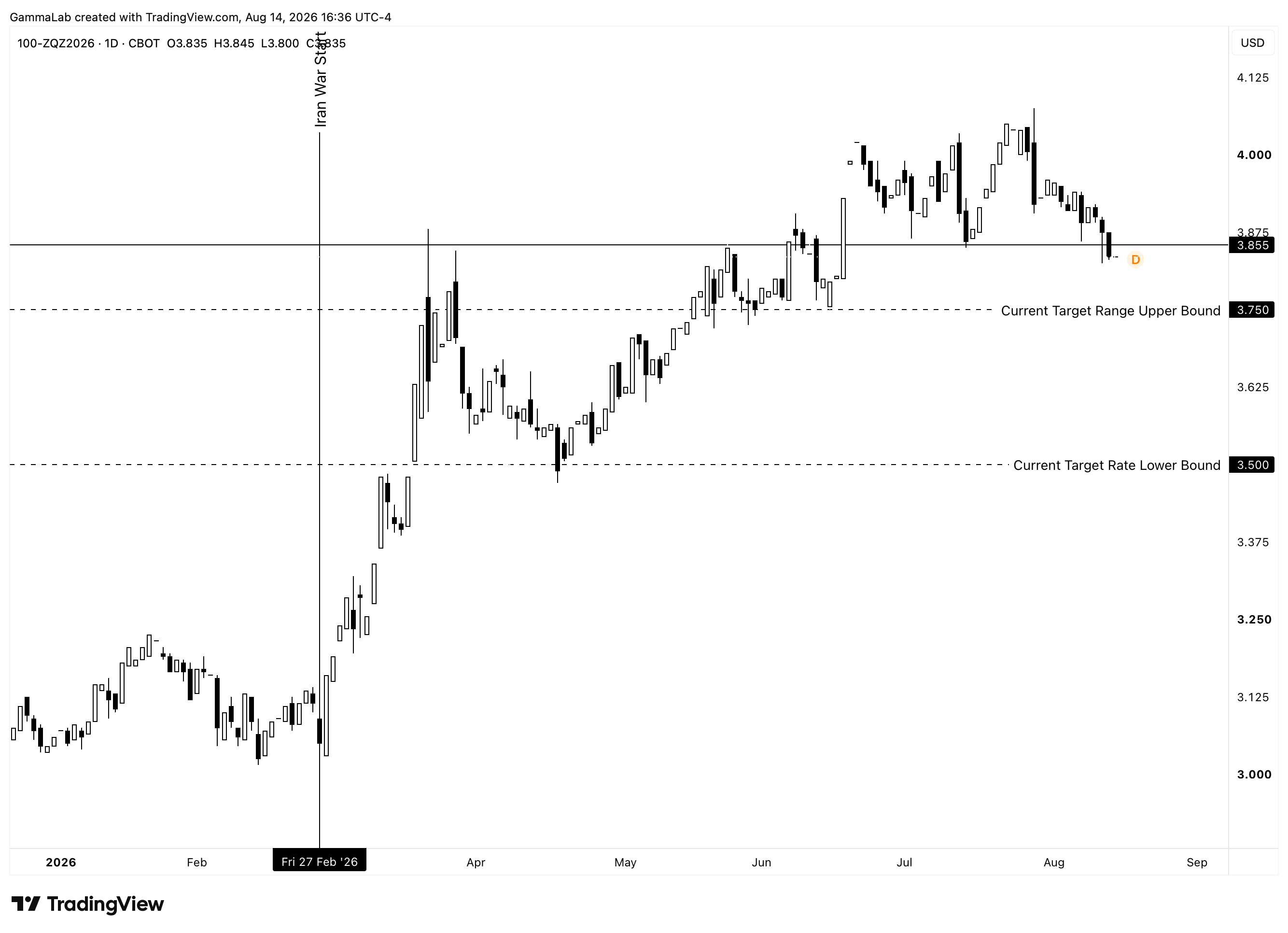
The back-to-back CPI and PPI prints pulled September rate-hike odds down from 55% a week earlier to 32%, giving equities room to re-rate higher into Thursday and Friday. The Fed Funds December contract (inverted, chart below) dropped back into the target range, implying no,, or maybe only one hike this year.
Monday
The S&P 500 closed essentially flat, masking a sharp sector rotation driven by stalled Iran-Hormuz diplomacy and a surge in crude. Early optimism around Oman-mediated talks and Maersk's return to the trans-Suez route faded after Trump demanded compensation from Iran and the country effectively ruled out reopening the strait, sending Brent up nearly 7% on the day.
Tuesday
The S&P 500 fell 0.3% as mega-cap technology dragged the index lower ahead of the CPI report, even as a rotation into cyclicals provided support and the equal-weight index rose 0.2%. Iran's Supreme National Security Council reaffirmed the strait would stay closed until the US ends the war and unfreezes Iranian funds, and WTI settled a dollar higher at $83.17. Intel upsized its equity offering to $20 billion, its first stock sale since 1971, and Nvidia's $500 billion AI compute financing initiative lifted Blackstone and BlackRock. July NFIB Small Business Optimism came in at 99.8, above consensus, while existing home sales of 4.06 million roughly met expectations.
Wednesday
The S&P 500 gained 0.3% as an in-line July CPI cleared the week's biggest macro hurdle and redirected attention toward AI infrastructure. Headline CPI rose 0.1% and core rose 0.2%, both matching consensus, pushing September hike odds to 40% from 48% the prior day, while the July budget deficit widened to $432.3 billion and the 10-year auction drew 4.683%, the highest yield since 2007. The Japan ETF led the tracked universe, up 1.6%, as South Korea's Kospi and Japanese equities rallied on the semiconductor bid. The session split sharply, with memory and data-center hardware names such as SK hynix, Seagate, and Micron surging while software, homebuilders, and several large-cap tech names declined. CoreWeave jumped more than 19% and Nebius and Super Micro Computer rallied on strong results.
Thursday
The S&P 500 rose 0.7% to a fresh record high as softer-than-expected July PPI reinforced the disinflation narrative, with headline PPI flat against a 0.1% consensus and core at 0.2% versus 0.3% expected, dropping September hike odds to 32%. Crude fell sharply on a 17.4 million-barrel US inventory build, the largest since January 2023, and lower demand projections from the IEA and OPEC. Memory and storage were the biggest rotation, with SanDisk up 13.7% at its investor day and Western Digital, SK hynix, and Micron all higher, while Workday jumped 17.8% on reports Silver Lake is in talks to acquire it. Cisco fell 8.4% despite a record quarter and above-consensus guidance as investors questioned its AI data center outlook. Weekly initial jobless claims rose to 209,000, slightly above the 205,000 consensus.
Friday
Storage names including Western Digital, Micron, and Seagate extended their gains, while Applied Materials fell 5.6% despite beating estimates and guiding above consensus, with the upside seen as already priced. Defense names firmed after Trump signed a proclamation imposing drone tariffs of up to 100%.
Gamma Situation
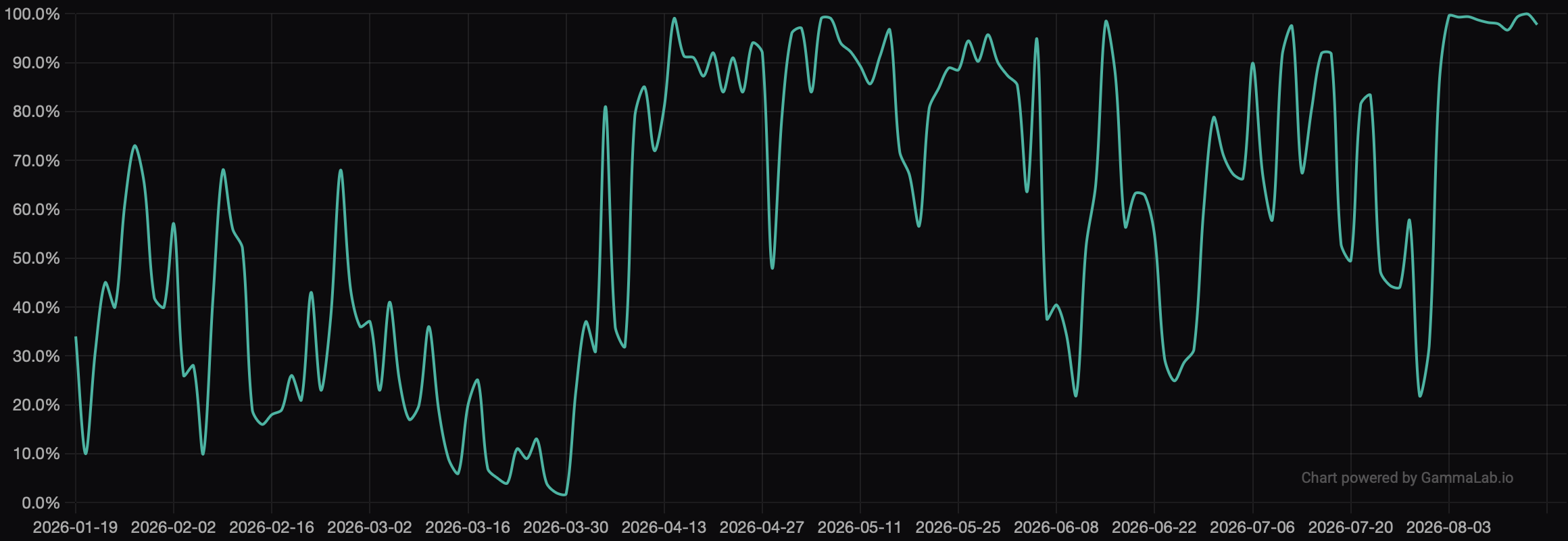
SPX gamma exposure closed the week at $1249 mln, up from $1225 mln at the start of the week, a $24 mln increase as dealers held long gamma through the grind higher. SPX GEX continues to run in the high-90s percentile (chart below), suggesting a market well-supported by dealer liquidity..
Systematic Situation
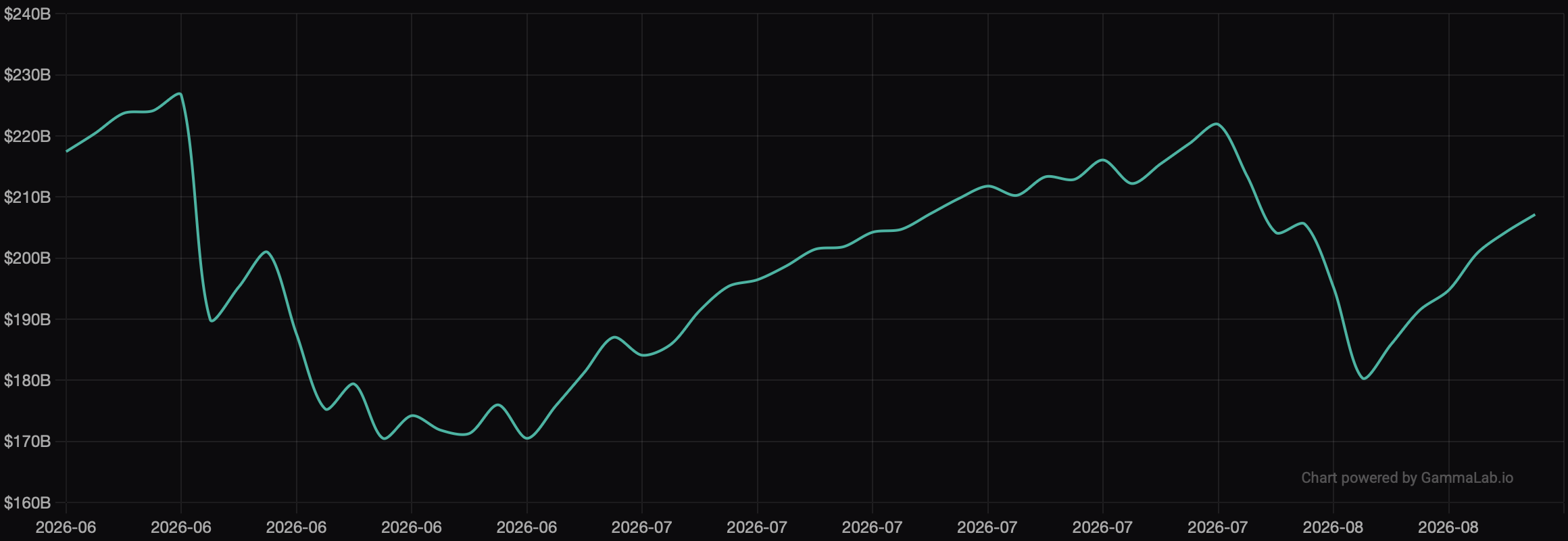
Vol-control notional exposure moved from $192B to $207B, a $16B increase over the week that clears this week's materiality bar as realized volatility stayed contained through the record close (chart below).
See you next week!
This is a post from GammaLab — real-time market intelligence powered by AI. Log in or subscribe to access the full platform.