What are CTAs and why do they matter?
Commodity Trading Advisors are professional investment managers, typically structured as hedge funds or managed-futures programs, that trade liquid futures, options, and foreign exchange markets.
Despite the “commodity” in the name, their universe spans far more than commodities: equity index, government bond, interest-rate, and currency futures all feature heavily.
The vast majority are systematic trend followers. They rely on algorithmic, computer-driven models to identify and ride directional moves, buying what’s rising and shorting what’s falling, rather than making discretionary calls on value.
How Much Money Do CTAs Move?
Estimated assets under management have grown from under $20 million in the 1980s to well over $300 billion today. The exact figure depends heavily on which funds are counted. Broad definitions sweep in multi-strategy and macro money that isn’t really trend following, but even on a conservative basis the number sits comfortably above $200 billion.
That scale matters for where they trade. Moving large positions in and out without distorting prices requires depth, so CTAs concentrate in the world’s most liquid, centrally-cleared futures and currency markets.
Why We Track Them
- They’re predictable. Because CTAs are mechanical, their flows can be modeled. Their process, buy strength and sell weakness via systematic signals, is well understood and academically documented, so their positions can be reconstructed and their future trading anticipated. This makes them one of the three main price-agnostic flows we monitor, alongside option-dealer hedging and volatility-control funds.
- They’re big. At aggregate scale, CTAs can act as a structural bid or a structural sell order in a market, so for a trader, knowing whether you’re moving with or against this whale matters. Modeling their exposure also tells us where they stand: whether CTAs are “all in” and positioning is stretched, leaving risk skewed against them, or whether they’ve exited and have dry powder ready to deploy.
Recent Example
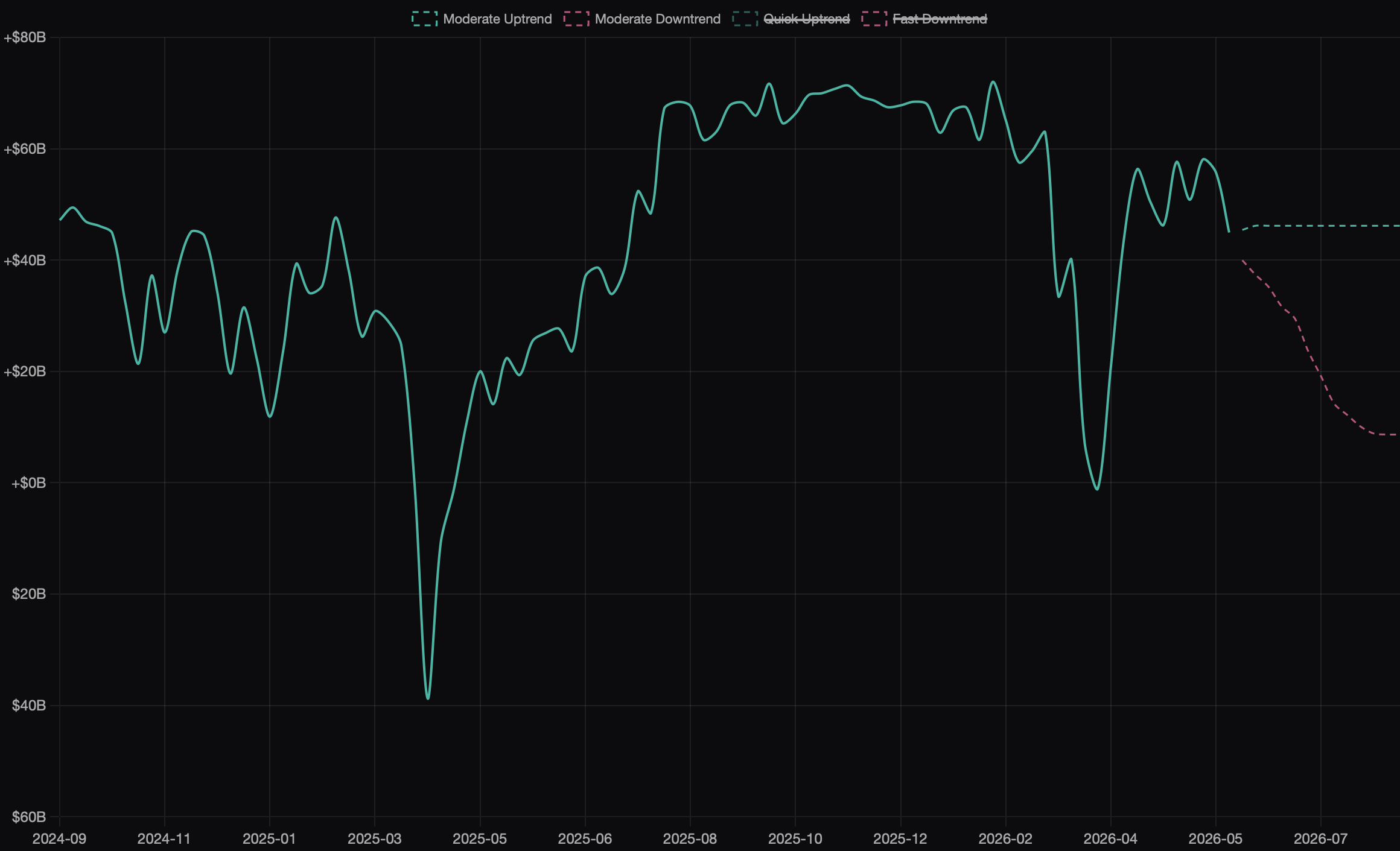
The chart below shows CTAs sitting almost max long the S&P 500 as of June 2026. Because they’re already near the top of their position range, they have far more capacity to sell than to buy from here, which is why risk is skewed to the downside.
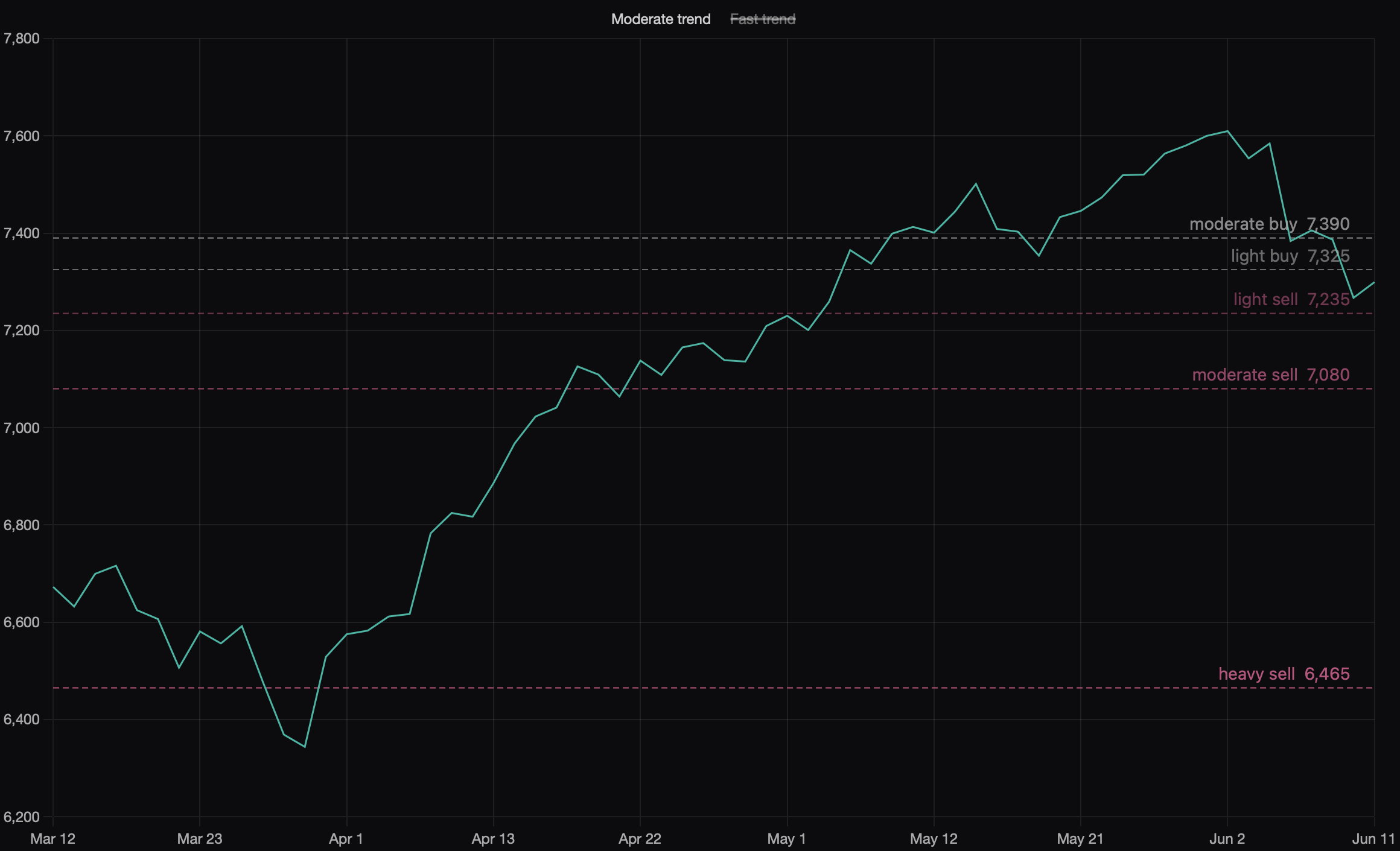
We can also model trigger levels: the price points at which CTAs are likely to flip in or out of the index (chart below), and estimate how large the resulting weekly buying or selling pressure would be, in billions of dollars.
That said, isolated CTA monitoring isn’t a magic bullet, even though it’s closely watched by professional money. It’s one important piece of the mechanical-flow puzzle, sitting alongside option-dealer delta-hedging, the largest flow we track, and volatility-control funds, which size positions to a volatility target rather than to price.
For the bigger picture, you can find our framework for how price discovery works in modern markets and where mechanical flows fit in via this blog. There’s also a deeper dive on delta-hedging and how option dealers move markets.
Next up, we discuss vol control funds, stay tuned!
This is a post from GammaLab — real-time market intelligence powered by AI. Log in or subscribe to access the full platform.